
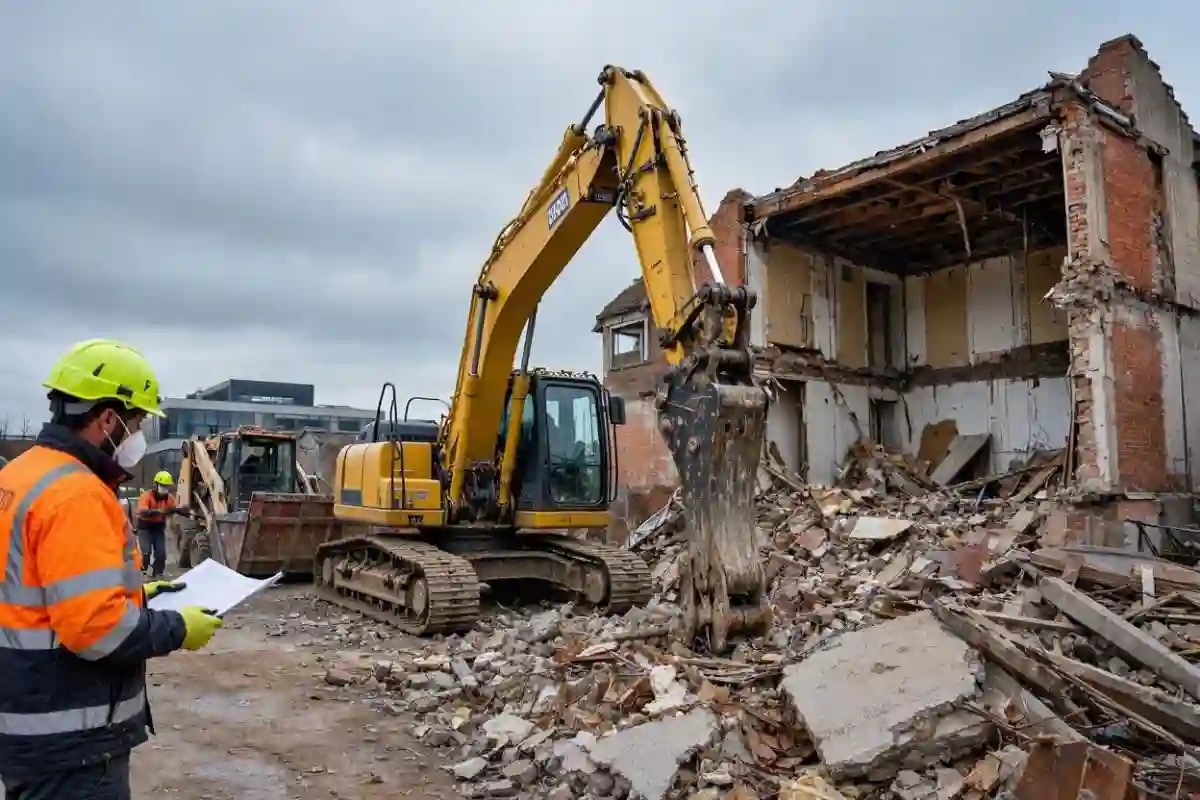
Demolition works in Dubai look simple from the road. A machine arrives. Walls come down. The trucks clear the rubble away. But if you have ever stood near a proper demolition site you know it is not quite that straightforward.
3AF Contracting considers its demolition a controlled form of construction work, not simply breaking concrete.3AF Contracting is based in Dubai and brings what comes next services; civil construction works, structural works, renovation works and re-building works. This experience is relevant as demolition frequently has a direct consequence, the plot needs to be cleared, the villa needs rebuilding, the broken building may require a partial rather than full removal.
Per the demolition permit before the beginning of any demolition has to be given. The permit process may also require method statements, risk assessments, site photographs, fencing plans, utility approvals, and other documents depending on the location and type of work.
Click for inquiry about Demolition work in Dubai
What does demolition work in Dubai really include?
Demolition work means taking down a building or part of a building in a safe and planned way. It can include a small internal removal, a villa demolition, a commercial building tear down, or the removal of damaged structural sections.
A normal job may include.
- Site inspection and measurements.
- Checking the building structure.
- Finding water, electricity, telecom, and drainage lines.
- Applying for permits and requiring no objection certificates.
- Installing hoarding, signs, and protection.
- Removing doors, glass, fittings, and loose items first.
- Breaking concrete or masonry in a controlled order.
- Loading and removing waste.
- Cleaning and leveling the plot.
The first visit can reveal small details that change the whole plan. A narrow gate may not allow a large excavator inside. A shared wall may need hand tools. An old roof may be weaker than expected. These things sound ordinary, but they affect time, cost, and safety.
Why is a site survey important before demolition?
A site survey shows what is actually there, not what someone thinks is there. It checks the structure, nearby buildings, access, utilities, boundary walls, road conditions, and possible risks.
In Dubai, this step is especially useful for older villas and buildings that have seen many changes. An extra room may have been added. A staircase may have been altered. Air conditioning pipes can run through places that are not shown on old drawings.
A proper survey usually checks:
| Area checked | Why it matters |
|---|---|
| Structure | Shows weak slabs, beams, columns, and walls |
| Utilities | Helps prevent damage to live services |
| Neighbouring buildings | Reduces movement, cracking, and vibration risks |
| Site access | Confirms where machines and trucks can move |
| Boundary walls | Shows whether hand demolition is needed |
| Waste route | Helps plan loading and disposal |
Does demolition in Dubai need a permit?
Yes. Demolition should not begin before the required approval and permit are issued. Dubai Municipality safety guidance says demolition work cannot start without a demolition permit from the concerned department.
Depending on the project location, approvals may involve Dubai Municipality, Dubai Development Authority, DEWA, telecom providers, Civil Defence, police, or RTA. The exact list changes with the site and method.
The application can include.
- Demolition drawings and site plans.
- A method statement.
- Health and safety plans.
- Risk assessments.
- A hoarding or fencing layout.
- Photographs of the site.
- Utility disconnection approvals.
- A study of possible effects on nearby buildings.
Controlled explosion is not a normal choice for most Dubai sites. It needs extra studies and approvals. Mechanical demolition and careful manual dismantling are more common for villas, offices, warehouses, and fit out removal.
3AF Contracting can help organise the work around the approval process, but owners should still read the scope clearly. It should say who prepares documents, who submits applications, and who handles authority comments. That little detail avoids confusion later.
How does 3AF Contracting manage safety?
Safety starts before the first wall is touched. The site needs proper fencing, warning boards, access control, and a clear working area. Workers need personal protective equipment. Dust and falling material must be controlled.
A typical safe sequence may look like this.
- Inspect the structure and surrounding area.
- Disconnect and confirm services.
- Secure the site with hoarding.
- Remove loose furniture, glass, doors, and fittings.
- Protect sections that will remain.
- Dismantle from the top down where suitable.
- Keep machines away from unstable edges.
- Wet the work area to control dust.
- Load waste in a planned order.
- Inspect the site again after clearing.
The top down point is important. Pulling a lower wall too early can affect everything above it. On some jobs, a machine can do most of the work. On others, workers must strip the building by hand first. There is no single method that fits every site.
Noise is another practical issue. A demolition project beside occupied villas or shops needs better timing and communication. A neighbour usually accepts noise more easily when the site looks organised and the work does not continue without reason.
What happens to demolition waste in Dubai?
Demolition creates concrete, blocks, steel, wood, glass, gypsum, soil, and sometimes materials that need special handling. These materials should not simply be left on empty land or taken to an unknown dumping point.
Dubai waste rules require permits for waste management activities, and disposal sites also need proper approval. Dubai green building guidance also supports diverting a large part of construction and demolition waste away from landfills where possible.
On a well managed site, waste is separated as work moves along:
| Waste type | Usual handling |
|---|---|
| Concrete and blocks | Crushing, recycling, or approved disposal |
| Steel | Collection and recycling |
| Wood | Separate removal where possible |
| Glass | Careful packing and controlled transport |
| Gypsum | Separate handling if facilities accept it |
| Hazardous material | Specialist approval and disposal |
| Mixed rubbish | Approved waste transport and disposal |
How long do demolition works take?
The time depends on the building size, structure, access, approval period, method, and waste volume. A small internal removal may take a few days. A villa demolition can take longer, especially when walls are shared or machinery access is limited. Larger commercial sites need a proper programme and staged work.
A simple planning guide looks like this:
| Project type | Main time factors |
|---|---|
| Internal demolition | Finishes, partitions, elevators, access |
| Small villa | Permit, utilities, access, waste removal |
| Large villa | Structure, boundary walls, machine movement |
| Warehouse | Roof type, services, slab thickness |
| Commercial building | Approvals, neighbours, traffic, staging |
How should owners choose a demolition contractor?
Price matters, of course. But the lowest price may leave out permits, waste transport, protection, or final cleaning. A fair comparison needs the same scope from each company.
Ask the contractor:
- Is the site survey included?
- Who handles demolition permits?
- Are utility disconnections included?
- What safety controls will be used?
- How will dust and noise be managed?
- Where will the waste go?
- Is transport included?
- Will the plot be cleaned and levelled?
- What happens if a hidden structure is found?
- Is insurance and worker safety coverage in place?
3AF Contracting presents its work around construction, renovation, reconstruction, and industrial solutions rather than treating demolition as an isolated activity. That can be useful for owners who need demolition followed by structural work or a new build. Still, the written quotation should carry the real weight. Clear details are better than a nice conversation.
There is also a simple site feeling that tells a lot. Are workers wearing the right equipment? Are trucks covered? Is the entrance clean? Is someone checking the edge of the building before the machine moves? Small signs usually show whether the work is being managed seriously.
FAQs
Partial demolition is possible when the remaining structure is assessed and protected. The method depends on walls, slabs, services, access, and nearby buildings. A site survey is needed before confirming the work.
The contract should clearly state responsibility. The contractor can prepare and submit documents, while the owner may need to provide ownership papers or approvals. The work must wait until the required permit is issued.
Yes, concrete, blocks, steel, wood, and other materials may be separated for approved recycling or disposal. The actual route depends on material type, quantity, and Dubai waste requirements.
It can be safe when the structure is surveyed, utilities are isolated, protection is installed, and the correct method is used. Shared walls and tight access usually need slower manual work before machinery is used.


Comments are closed